
By Stefan Terwindt ·
Best time for African safari: dry season versus green season
In many wildlife areas, drier months mean thinner vegetation and animals spending more time near remaining water. That can make game viewing easier, especially for a first-time visitor learning to spot wildlife. Dry does not always mean warm: early starts in open vehicles can feel cold in some regions. Later in a prolonged dry period, heat and dust can become important considerations too.
Green months often bring fresh growth, active birdlife and striking skies. Some areas may be quieter or offer more favorable rates, but neither is universal. Rain can fall in short bursts or disrupt travel more substantially, depending on the place and weather pattern. Ask about road access, camp opening dates and activity flexibility. Choosing green season works best when you genuinely enjoy its strengths, rather than expecting the same visibility and logistics as the driest months at a different price.
Kenya safari timing: choose the area, not just the month
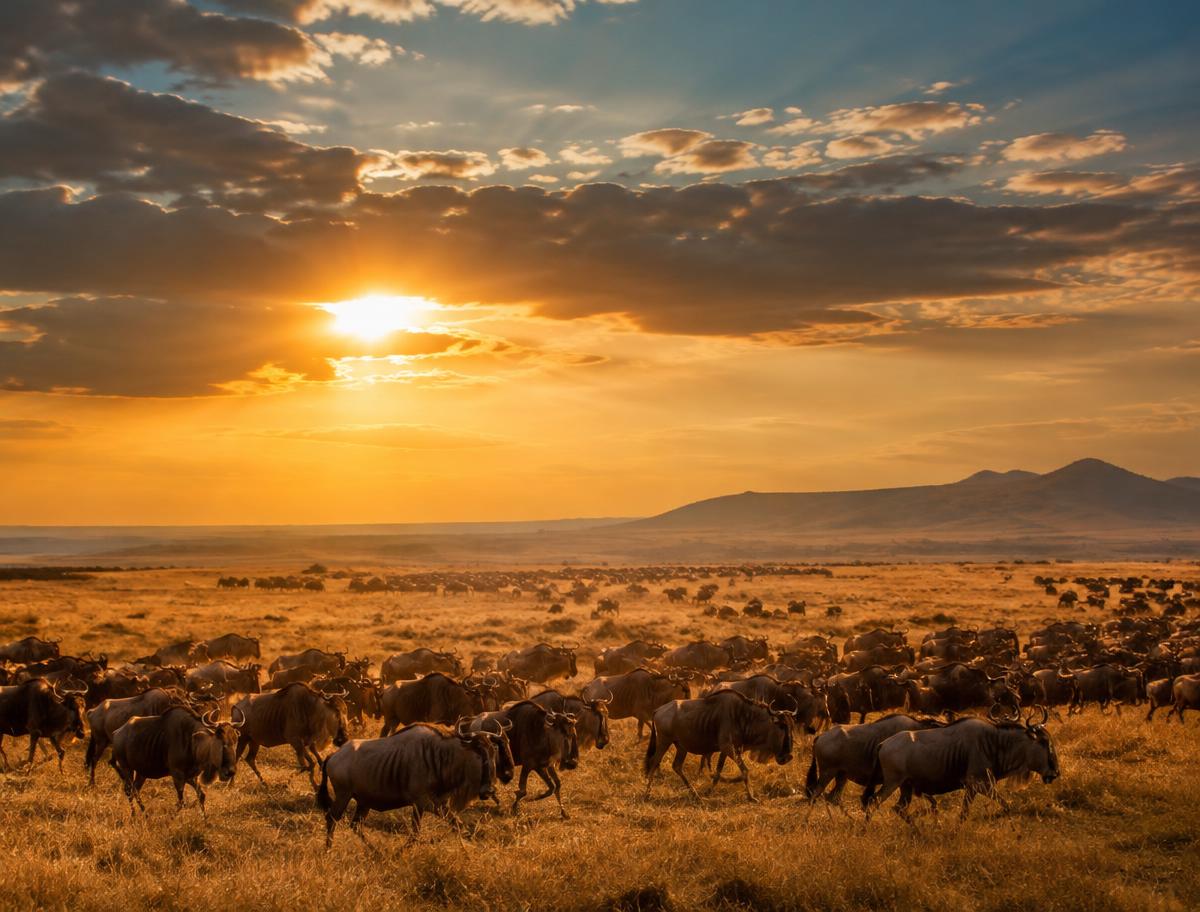
Kenya offers more than one seasonal safari story. In the Maasai Mara, migration-related river crossings are commonly associated with roughly July through October, but the herds respond to rainfall and grazing. They do not follow a dependable timetable, and crossings cannot be scheduled. Resident wildlife remains an important reason to visit outside the migration-focused period, so ask what the area offers beyond a single headline event.
For travelers with fixed dates, camp location can matter as much as the national seasonal summary. A stay in a conservancy and a stay in the main reserve may have different access arrangements, activity options and daily patterns. During wetter periods, discuss road conditions and how guiding adapts. If your goal is a quieter experience rather than a particular wildlife spectacle, say so early. Your planner can then compare places and timing around that priority instead of assuming the busiest migration months are automatically your best choice.
Tanzania safari timing: follow the right part of the Serengeti
The Serengeti is a large ecosystem, and choosing the right area for the season is more useful than asking whether Tanzania is good in a particular month. Calving in the southern Serengeti ecosystem is usually associated with roughly January through March. Migration-related river crossings farther north are often linked with roughly July through October. Rainfall, grazing and animal movements can shift the details in either period.
A trip built around seasonal herds should explain why each camp is positioned where it is. Ask whether the property is seasonal, how transfers work and what wildlife opportunities remain if the herds move elsewhere. If you combine the Serengeti with other northern safari areas, look at the entire route rather than treating every stop as seasonally identical. Adding destinations can create variety, but it can also dilute time in the area that matters most. Protect enough nights for patient observation instead of chasing a moving prediction.
Uganda and Rwanda: when to plan gorilla trekking
Gorilla trekking is generally offered year-round in Uganda and Rwanda. Relatively drier periods, often around June through September and December through February, can make some forest trails more manageable. Even then, rain is possible, and the forest remains a place for waterproof layers and suitable footwear. Drier conditions do not turn a trek into a guaranteed short or easy walk.
Choose dates with the full journey in mind. Permit availability, lodge access, travel time and your own walking comfort all matter. Ask how the trek is organized and explain mobility concerns in advance, without assuming a particular group assignment or duration can be promised. If combining trekking with savanna wildlife viewing, compare the seasons in both locations rather than transferring one country’s pattern to the other. A sensible combination may involve accepting a seasonal compromise in return for enough time and energy to enjoy two very different experiences.
Botswana safari timing: floodwater and rainfall are different
The Okavango Delta’s flood cycle is not simply a reflection of local rain. Water arriving from upstream can spread through parts of the Delta during the southern winter, with higher water often associated with roughly June through August. Timing and reach vary by year and location. One camp may have different water access from another even during the same week, so a broad flood-season label is not enough.
If mokoro excursions or boating are important to you, ask whether the proposed camp normally offers them during your dates and what alternatives exist if conditions differ. Dry-season land-based wildlife viewing is another reason people choose these months. During greener periods, birdlife, landscapes and a quieter atmosphere can be appealing, while some routes or activities change. A combination of camps can offer complementary habitats, but only if their actual activities differ. Do not assume two properties with Delta addresses will deliver identical experiences.
Namibia safari timing: balance waterholes, heat and road travel
Namibia’s cooler dry months are popular for wildlife viewing in Etosha, where animals often gather at waterholes as surface water becomes scarcer. That pattern can make patient watching rewarding, but movement still varies and no waterhole guarantees a sighting. Colder mornings and evenings can surprise travelers who think a desert itinerary only requires light summer clothing. Layers are useful even when daytime sunshine feels strong.
Desert landscapes such as Sossusvlei can be visited through much of the year, but heat changes how a day should be planned. Early starts and time out of the midday sun become particularly important in warmer periods. For a road-based route, consider distances, daylight and realistic arrival times alongside seasonal scenery. If rain affects your dates, ask about the specific roads and backup arrangements. Namibia often rewards a slower landscape-focused journey, so do not choose the month solely around animal visibility and overlook the rest of the itinerary.
South Africa safari timing: Kruger and Cape Town differ
Private reserves near Kruger can offer rewarding wildlife viewing throughout the year. The drier winter months often bring more open vegetation and easier visibility, while greener months create a different landscape and can suit travelers interested in birdlife. Daily conditions still vary, and the reserve’s habitat, guiding and location matter alongside the season. Winter game drives may call for warm layers even when afternoons are comfortable.
Cape Town follows a different seasonal rhythm, with warmer conditions generally associated with the southern summer. If your ideal trip includes both safari and time in the city, there may be no single month that maximizes every preference. Decide whether beach weather, walking, wildlife visibility or fewer visitors matters most. A balanced itinerary can work better than chasing a theoretical perfect season. Also check the particular South African safari region being proposed: the country is too varied for one weather summary to describe every reserve accurately.
Month-by-month guide at a glance
Weather varies year to year, so treat this as a planning starting point. ‘Good’ means a strong time for that destination’s main safari experience.
- ●January–February: Serengeti south (calving season, typically late Jan–Feb) is strong; Kenya short dry season; Southern Africa is green, hot and wet; Uganda and Rwanda in a drier window.
- ●March: Tanzania south Serengeti still good early in the month; rains begin building in East Africa; Kruger green with lush bush.
- ●April–May: Main long rains in Kenya, Tanzania, Uganda and Rwanda — some camps close; Botswana floodwaters begin arriving in the Delta; Southern Africa drying out.
- ●June: Dry season starts across most regions; Botswana, Namibia and South Africa enter peak game viewing; gorilla trekking conditions improve.
- ●July–October: Peak season almost everywhere: Mara river crossings are often July–September, Delta floods are high, waterholes concentrate wildlife in Namibia and Kruger. Book early.
- ●November: Short rains in East Africa; first rains in Southern Africa with dramatic skies and newborn antelope; good value in many areas.
- ●December: Festive-season demand in South Africa and East Africa; green season continues in Botswana and Namibia.
If your dates are fixed: where to look
- ●Only free in April–May: consider South Africa’s private reserves or Botswana as the floodwaters start to rise, rather than rain-soaked East Africa.
- ●Only free over Christmas: northern Tanzania or Kenya’s short dry season, or a Cape Town and reserve combination — book very early.
- ●Only free in August: almost anywhere works, but expect higher rates and plan 9–12 months ahead.
How to choose safari dates when your calendar is fixed
Start with your real travel window, including how many nights you can spend away, then rank two or three experiences. Ask for a comparison of destinations that suit those dates rather than a generic list of peak months. Include your tolerance for heat, cold starts, rain and busy sightings. These preferences can change the recommendation as much as a wildlife wish list does, especially when traveling with children or relatives.
Before booking, request a plain-language description of typical conditions, possible disruptions and any season-dependent activities. Check whether the suggested camp remains open and whether its location serves your goals at that time. Under The Safari Fit, When connects directly to Where, How, Where you stay and Who you travel with; it is never an isolated decision. Safari Match can help you begin that conversation. The best timing is the timing that supports a whole trip you would enjoy, not just a famous seasonal photograph.
Keep planning
Try Safari Match →