
By Stefan Terwindt ·
What makes an Okavango Delta safari different?
Much of the Delta’s safari experience is shaped by remoteness and relatively small camps. In many private concessions, access and vehicle activity are managed in ways that can reduce crowding. You may spend long stretches following tracks or watching a channel without meeting another group. That sense of space is valuable, but it varies by location, season and the rules governing each area.
Low density does not mean animals appear on demand. Some drives are quiet, and sightings can require patient tracking. The reward is often the whole setting: a floodplain opening beyond a stand of trees, birds working along a channel, or a guide explaining what changed overnight. Travelers who enjoy that process usually appreciate the Delta more than those measuring success only by a checklist of large mammals.
Okavango Delta seasons: rain and flood are different
The Delta’s water story is not determined only by local rain. Floodwaters arrive from rainfall farther upstream, so rising water can coincide with the region’s drier months. Flood extent and timing vary from year to year and across the Delta. Broadly, the southern winter is often associated with higher water in many areas, but a countrywide seasonal summary cannot tell you exactly what happens beside a particular camp.
During greener months, landscapes can be lush, skies dramatic and birdlife rewarding. Summer conditions may also bring heat, rain and different wildlife movements. The drier months often make some land-based viewing easier, but they are not automatically best for every activity. Decide whether your priority is game drives, water outings, photography or a mixture, then ask how the proposed camp usually performs during your actual travel window.
Land camps, water camps and mixed-activity stays
A land-focused camp generally puts game drives at the center of the experience. A water-focused property may emphasize channels, boating or mokoro outings. Some camps can offer a combination, depending on the water and local operating conditions. These labels are useful shorthand, not firm promises. Before booking, ask which activities are normally possible in your month and what happens if water levels differ from expectations.
Two camps can complement one another beautifully when they offer genuinely different habitats and activities. Two similar properties may add little beyond another flight and another unpacking session. If you have limited time, one well-matched base can be more satisfying. For a longer trip, think in terms of contrasting experiences: perhaps a game-drive emphasis followed by a slower stay with meaningful access to the waterways.
Mokoro trips, boating and guided walks
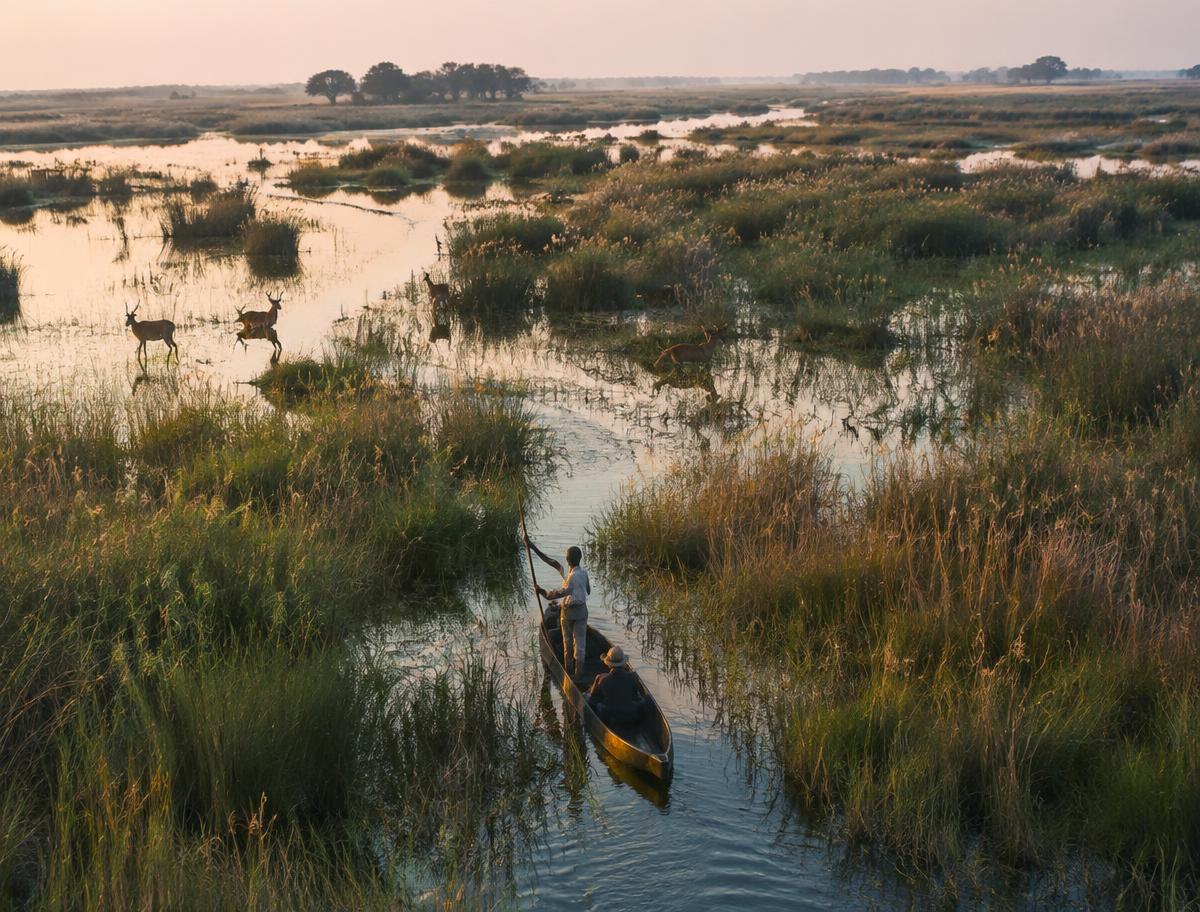
A mokoro outing is usually about moving quietly through shallow water and noticing details at water level. Many contemporary craft use modern materials rather than traditional dugout construction. The experience is not a substitute for a game drive, and you should not expect the same wildlife encounters. Watch for small frogs, water plants, reflections and birds, and let your guide set the pace and explain safety procedures.
Boating can cover different waterways and distances, while guided walking brings attention to tracks, plants and the smaller signs of life. Availability depends on location, conditions, staffing and operator rules. Minimum ages and other restrictions may apply. If any one activity is central to your holiday, put that requirement in writing before choosing a camp and understand the alternatives if conditions prevent it from operating.
Fly-in logistics and luggage for Delta camps
Many remote Delta camps are reached by light aircraft, often through regional gateways such as Maun. Not every part of the wider Delta region is fly-in only, so check the particular route rather than assuming every property has the same access. Flights may involve intermediate stops. Travel time depends on the day’s routing, and a short distance on a map does not tell the whole story.
Soft-sided luggage is commonly required, with limits that can include both checked baggage and hand luggage. Confirm the current allowance for every flight and ask how camera equipment or medical items are handled. Pack essential medication and travel documents where they remain accessible. The aerial views can be memorable, but schedules, weather and operational needs come first; consider that scenery a bonus rather than a guaranteed sightseeing flight.
Choosing a Delta camp for fit, not fame
Start with the habitat and the guide-led experience, then work outward to the room. Is the camp well placed for your preferred activities in that season? Are drives shared, and how is seating handled? How far is the airstrip transfer? These practical details influence daily comfort more than a dramatic photograph of a deck. A beautiful room cannot solve an activity mismatch.
Be specific about your needs. Some camps have raised walkways, uneven paths or open-sided layouts that may not suit every traveler. Family accommodation, charging arrangements and overnight assistance also vary. Remote does not necessarily mean uncomfortable, but it does mean you should understand how the property works. Describe mobility concerns and health requirements early so the operator can assess suitability without relying on assumptions.
Who the Okavango Delta suits best
The Delta often appeals to travelers who value space, guiding and time to notice a landscape. It can be a rewarding second safari after East Africa or South Africa, because the watery environment feels different. It can also make a wonderful first safari when expectations and camp choices are aligned. You do not need previous safari experience; you do need an itinerary that matches what you hope to do.
Families should check age restrictions for accommodation and individual activities, rather than assuming children can join everything. Photographers may prioritize vehicle arrangements and time at sightings. Couples might value the quieter rhythm of a longer stay. If someone is uncomfortable in small aircraft or wants frequent independent outings, discuss that before committing. Fit includes the journey and daily routine, not just the destination’s reputation.
Camp types explained
- ●Water camps: set on permanent channels; mokoro and boat trips are the focus, with limited game driving.
- ●Land camps: on drier islands and the Delta’s edge; game drives are the focus, often with strong predator viewing.
- ●Mixed camps: offer both, depending on water levels; a good choice for a single Delta stay.
- ●Mobile or seasonal camps: simpler tented camps that move or open seasonally, for a more adventurous feel.
Seasons and activities, month by month
- ●December–March (green season): rains, newborn animals, birding; lower rates; some water activities limited.
- ●April–May: floodwaters arrive from Angola; landscapes are green and quieter.
- ●June–August: high floods, cool mornings, excellent mokoro trips and game viewing; peak demand.
- ●September–October: very hot, wildlife concentrated at water, superb game viewing.
- ●November: first rains; good value and dramatic skies.
Where the value lies
Botswana’s low-density model means fewer guests and higher nightly rates; many Delta trips sit in the luxury band on our Safari Cost page. A good balance is three nights in a water camp and three in a land camp, rather than many short stays — each move adds a flight.
Budget, trip length and thoughtful combinations
Remote logistics, small camp capacity and concession arrangements can make a Delta itinerary a substantial investment. Compare what is included, including activities, transfers, fees and drinks, without assuming every camp follows the same model. Spend first on the right location and enough nights to settle in. A rushed succession of celebrated properties can deliver less enjoyment than a simpler itinerary with a clear purpose.
The Delta can combine with other parts of Botswana or, if it suits your plans, Victoria Falls as an onward extension. Allow proper time for transfers and any border requirements. Use The Safari Fit to connect Where, When, How, Where you stay and Who you travel with. When those five decisions align, the Delta’s value is easier to understand: not more spectacle every minute, but a distinctive way of experiencing the wild.
Keep planning
Explore Botswana safaris →