
By Stefan Terwindt ·
Tanzania vs Kenya safari: start with the experience
Tanzania often appeals to travelers picturing a broad northern circuit: elephant country in Tarangire, the distinctive setting of the Ngorongoro Crater, and several days on the Serengeti’s plains. Those places offer different landscapes, but combining them means real travel time. A map can make the distances look more manageable than they feel after an early start and a bumpy road.
Kenya can work particularly well when you want a more concentrated trip, perhaps with one main wildlife base in the Maasai Mara ecosystem. Its private conservancies can add a quieter setting and a different rhythm. That does not make all Kenyan safaris intimate or all Tanzanian safaris expansive. Compare the actual camps and access arrangements rather than treating either country as a single product.
Serengeti vs Maasai Mara: scale and daily rhythm
The Serengeti’s scale is part of its appeal. Staying in the right area lets you settle into a landscape rather than spending every day crossing it. On a longer itinerary, two carefully chosen bases may reveal useful contrasts. Moving simply to collect another camp, however, can cost you the unhurried morning that would have been the trip’s highlight.
The Maasai Mara is smaller, which can suit travelers who want productive wildlife drives without a long circuit. Popular sightings in the reserve may attract several vehicles, especially during busy periods. Some neighboring conservancies manage vehicle access differently. Ask where your drives actually happen, because sleeping in a conservancy does not mean every outing remains there, and access rules vary by property and area.
Great Migration timing in Kenya and Tanzania
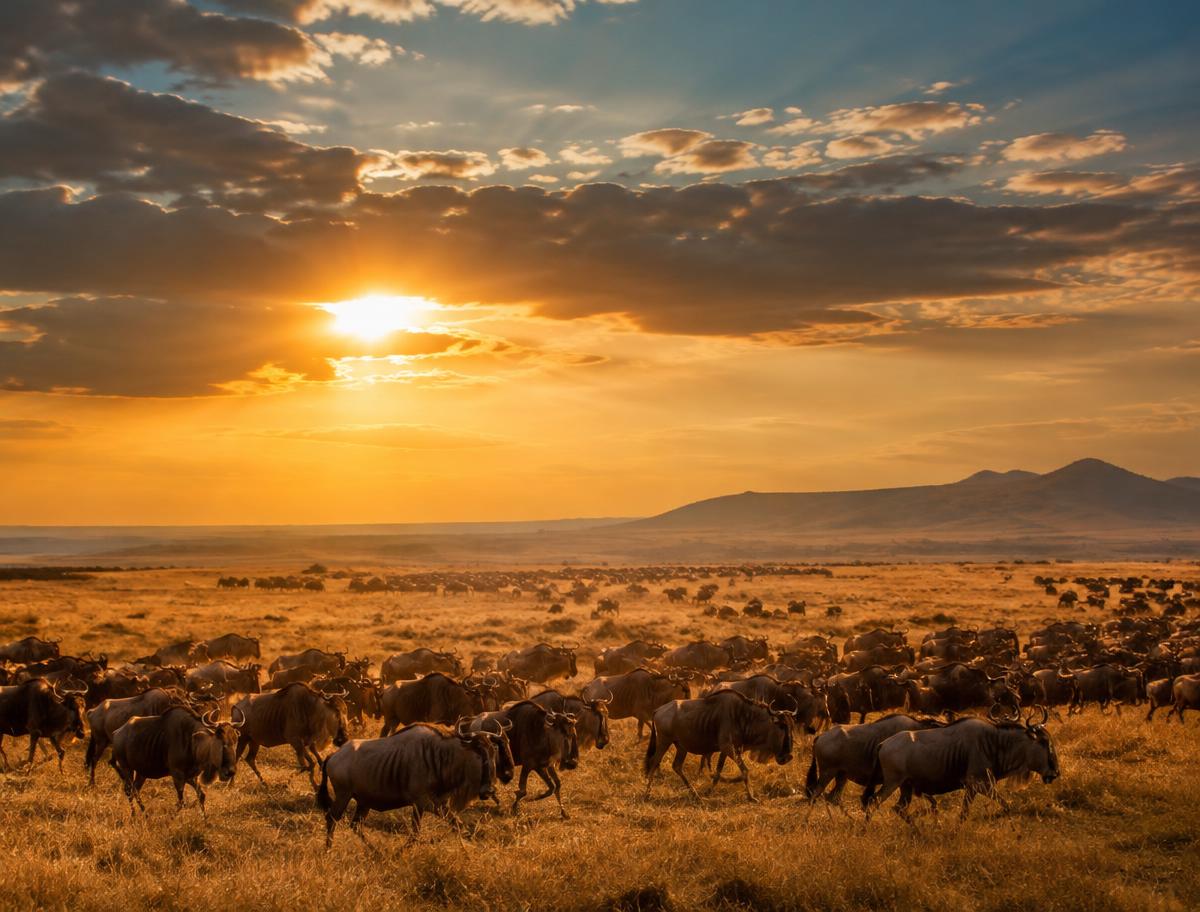
The migration moves in response to rainfall and grazing, not a published timetable. Calving in the southern Serengeti is usually associated with roughly January to March. Herds often move toward the western and northern parts of the ecosystem later in the year. Northern Tanzania and Kenya’s Mara are commonly considered for river-crossing season, broadly around the middle and later dry-season months.
Those are planning patterns, not promises. A river crossing may happen while you are elsewhere, or the animals may gather and then turn away. Choose enough nights in a suitable area and stay open to everything around you. Resident predators, birds and smaller encounters can make a wonderful day even when the migrating herds are out of sight. Neither country can guarantee the scene you have seen in a documentary.
Private conservancies, crowds and activity choices
Kenya’s Mara conservancies are worth considering if fewer vehicles and flexibility are important. Depending on local rules and the operator, activities may include guided walks or night drives alongside conventional game drives. Confirm what is actually offered, who leads it and whether your age group can participate. A general description of a conservancy is not a substitute for the camp’s current activity information.
Tanzania also offers areas and properties with different access arrangements, so it is too simple to label Kenya private and Tanzania public. Within either country, location, season and guiding decisions affect how busy a sighting feels. If a quieter experience is your priority, say so explicitly. The answer might involve a different base or travel month rather than a more elaborate room or a famous property name.
Getting around: flights, roads and useful safari nights
A flight from Nairobi to the Mara can make a shorter Kenyan itinerary practical, although airport transfers, check-in and onward travel still occupy time. Do not count a transfer day as a full safari day. If your international flight arrives late, an overnight stop may be more comfortable than trying to connect immediately. Build the route around workable connections, not the most optimistic timetable.
Tanzania’s northern circuit can combine road travel with internal flights. Driving offers continuity and landscape along the way; flying can reduce a long road section. Neither is automatically the better choice. Ask for realistic door-to-door timings, including gate procedures and stops. For a week on safari, fewer well-chosen bases usually feel better than attempting every northern highlight and spending much of the trip changing locations.
Kenya and Tanzania pairings: beaches and gorillas
Tanzania pairs naturally with Zanzibar when you want time by the ocean after early safari mornings. Kenya’s coast can provide a similar change of pace after the Mara. Think about the beach stay as its own decision: swimming conditions, coastal weather, transfer arrangements and the atmosphere of the property all matter. A beach extension should give you recovery time rather than another sequence of hurried check-ins.
Kenya can also combine with gorilla trekking in Uganda, particularly when flight connections and available permits align. Tanzania can be paired with Uganda too, but assess the extra travel honestly. These are distinct experiences requiring separate planning, not neighboring activities you can casually add to an afternoon. When total time is short, doing one safari well may be more satisfying than adding a second country just because it is possible.
Comparing costs and camps fairly
Neither Kenya nor Tanzania is always the cheaper option. Season, room setup, transport, park or conservancy fees, and whether a vehicle is private all affect the total. Compare the whole itinerary rather than a headline nightly rate. A camp outside a wildlife area may have an attractive room price but add driving each morning, while a flight can cost more and still protect valuable time.
Ask what each stay contributes. Perhaps one base gives strong access to the landscape you want, while another offers a gentler daily routine for your children. Guiding and location usually influence the wildlife experience more directly than decorative extras. Request a clear explanation of inclusions and exclusions, especially if comparing a road-based private trip with a fly-in itinerary that uses shared camp activities.
Side-by-side comparison
- ●Scale: Tanzania’s Serengeti ecosystem is vast; Kenya’s Maasai Mara is smaller and more concentrated, with surrounding private conservancies.
- ●Migration: the herds are in the southern Serengeti for calving around January–March, move north through the Serengeti mid-year, and are often in the Mara around August–October.
- ●Crowds: busy areas exist in both; Kenya’s conservancies limit vehicle numbers, while Tanzania’s remote areas spread visitors out over large distances.
- ●Activities: Kenya’s conservancies often permit night drives, walks and off-road driving; national-park rules in Tanzania are generally stricter.
- ●Other highlights: Tanzania has Ngorongoro Crater, Tarangire and Kilimanjaro views; Kenya has Laikipia (rhino and conservation work) and Samburu (northern specialist species).
- ●Pairings: both pair well with an Indian Ocean beach and with gorilla trekking in Uganda or Rwanda.
Which one, by traveller type
- ●First safari with limited time: Kenya — shorter flights from Nairobi and a dense concentration of wildlife.
- ●Wide-open landscapes and longer trips: Tanzania.
- ●Calving season (Jan–Mar): Tanzania’s southern Serengeti.
- ●Families wanting walks and flexibility: Kenya’s conservancies.
- ●Can’t decide? Both can be combined in one trip, with a short flight between them.
Use The Safari Fit to choose your country
Our framework, The Safari Fit, starts with Where and When: the areas that suit your interests and dates. How covers the route, transfers and pace. Where you stay means choosing a useful location and appropriate comfort, not simply the most recognizable name. Who you travel with brings in children, mobility, photography interests and the different ways people enjoy a day outdoors.
Choose Tanzania if a varied northern circuit and the Serengeti’s broad landscapes match your available time. Choose Kenya if a focused Mara stay, perhaps with a conservancy element, better fits your pace. These are starting points, not rules. The right decision is the one you can explain in terms of your own trip: enough nights, sensible travel, the right season and room to enjoy what happens.
Keep planning
Explore Tanzania safaris →