
By Stefan Terwindt ·
Kruger National Park versus Greater Kruger
Kruger National Park is a protected national park with its own management, roads, visitor rules, and accommodation options. Greater Kruger is a broader geographical and conservation term commonly used for the park and adjoining protected areas, including some private reserves. It is not one accommodation product or a single set of visitor rules. When someone says a lodge is in Greater Kruger, ask for its exact reserve and location.
Some adjoining reserves share open wildlife boundaries with the national park or with neighboring reserves. That ecological connection does not create unrestricted access for safari vehicles. Wildlife movement and visitor driving rights are separate subjects. A lodge may operate within a defined area even where animals can range much farther. Understanding that distinction helps you interpret claims about enormous landscapes without assuming every game drive can explore all of them.
What Sabi Sands means when choosing a lodge
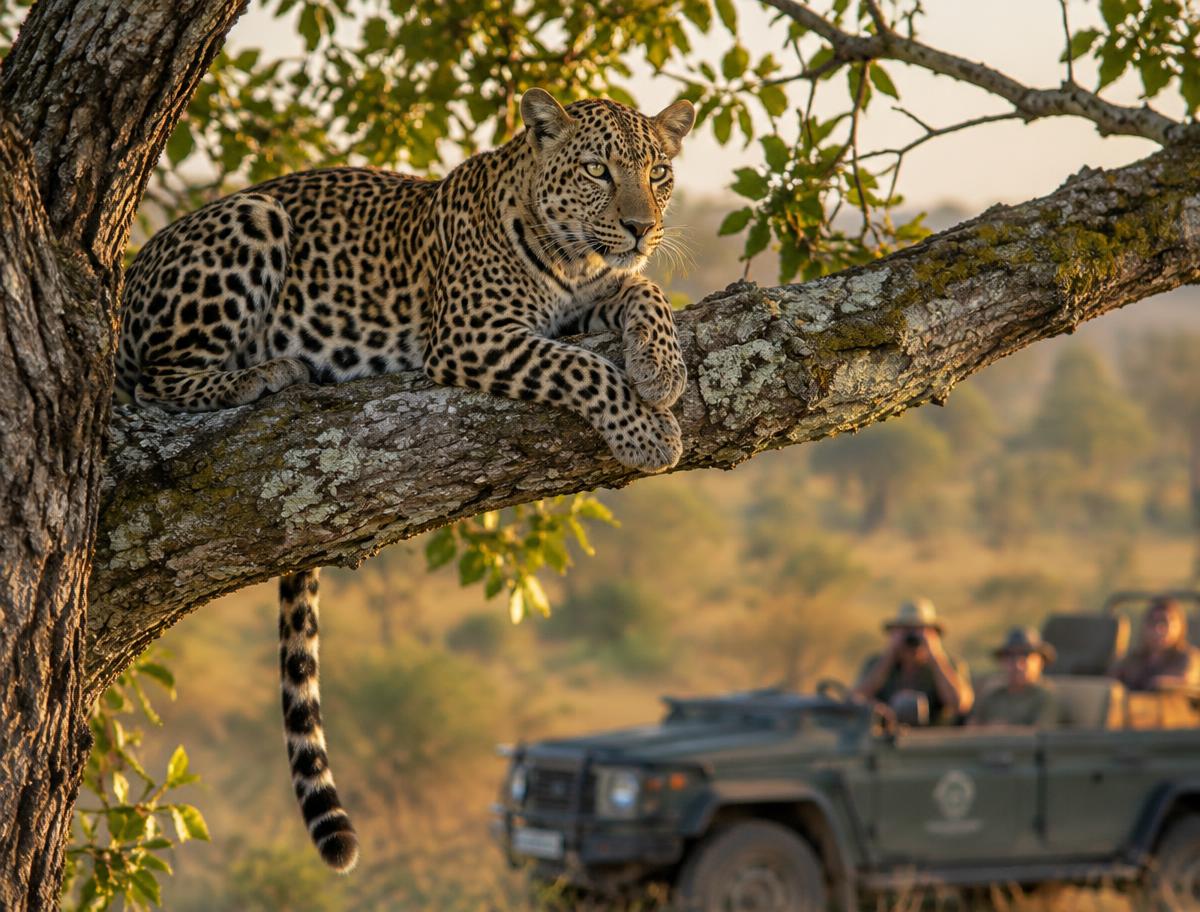
Sabi Sands is a private reserve area adjoining Kruger National Park and is part of the wider Greater Kruger landscape. It contains multiple properties and operating areas rather than one uniform safari experience. Its reputation often draws travelers interested in predator viewing, including leopards, but reputation is not a guarantee of what you will see during a particular stay.
The difference between properties can be meaningful even when their addresses share a familiar reserve name. Location, guiding arrangements, traversing agreements, vehicle numbers, and the pace of drives can all vary. Ask where your lodge’s vehicles may go and whether that area changes through agreements with neighboring landholders. You do not need to become an expert in reserve boundaries, but you should understand enough to compare two proposals on something more useful than the bedroom photographs.
Private reserve access and traversing rights explained
Traversing rights describe where an operator is allowed to take its safari vehicles. Some properties have access to a larger shared area; others work within more restricted boundaries. A larger area can offer flexibility, but size alone is a poor shortcut for quality. Habitat, current wildlife distribution, guide knowledge, road layout, and the number of vehicles using the same space all influence the experience.
Ask a planner to explain the practical consequences rather than supplying only an area figure. Can drives explore different habitats? Are there restrictions near boundaries? How are sightings coordinated? Some operators use radio communication to manage sightings and limit crowding, but exact procedures differ. A good explanation should acknowledge trade-offs. Tight coordination may help access a sought-after sighting, while a quieter drive may prioritize exploring without following every report.
Off-road driving, night drives, and walking safaris
Some private reserves allow guided off-road driving under specific rules, and some offer activities after dark or on foot. Do not treat these as universal features included at every lodge. Permissions, habitat sensitivity, weather, guide qualifications, and the property’s own policies affect what is possible. Off-road access may help a guide position a vehicle, but responsible operators still need to consider vegetation, soils, and disturbance.
Walking is also a distinct experience, not simply a game drive without the vehicle. It may focus on tracks, plants, insects, and reading the landscape rather than approaching large animals. Age limits, fitness expectations, and availability can differ. If one of these activities is central to your choice, have it discussed explicitly before booking, including any extra charges and the circumstances that could prevent it. A possible activity should not be mistaken for a guaranteed daily inclusion.
Shared vehicles versus private safari vehicles
Many lodge-based safaris use shared vehicles with a guide and, at some properties, a tracker. That can be sociable and works well when guests enjoy a similar pace. Seating configurations, maximum guest numbers, and how requests are handled vary, so ask rather than assume. A small property does not necessarily mean your family or couple will have a vehicle to yourselves.
A private vehicle may be useful if you have young travelers, particular photographic goals, or different needs around drive duration. It can allow greater control over the outing, within reserve rules and operational constraints. It does not mean you can approach wildlife however you like or remain at a sighting indefinitely. Consider whether the added flexibility solves a real need. For some travelers, good shared guiding offers exactly the balance of companionship and expertise they want.
Choosing a Greater Kruger lodge for your travel style
A lodge is your base between activities as well as the starting point for them. Consider the distance from arrival airport to room, the amount of walking around the property, and whether access involves steps or uneven paths. Ask about room configurations and children’s policies. Some properties are well suited to family travel, while others have restrictions that make them a poor fit even if the wildlife area appeals.
Your tolerance for early starts matters too. A short stay can feel busy once flights, transfers, meals, and scheduled drives are included. More nights at one suitable property may create a more satisfying experience than switching between nearby lodges. If you are combining safari with other parts of South Africa, compare the whole route. A lodge that seems ideal in isolation may require awkward connections that reduce the holiday time you actually get to enjoy.
Questions to ask before booking a private reserve safari
Use The Safari Fit to keep the choice grounded. Where means the actual reserve and traversing area, not only the Greater Kruger label. When means your season and the conditions that may shape viewing. How covers transfers, vehicles, and activity pace. Where you stay concerns both comfort and access. Who you travel with determines whether the arrangements work for everyone rather than only the most enthusiastic wildlife watcher.
Finally, separate strong possibilities from promises. A celebrated reserve can still have quiet drives, and an excellent guide cannot schedule wild animals. Ask for a clear account of inclusions, reserve fees, activity restrictions, and cancellation terms. Seek current medical advice for your itinerary, including malaria precautions where relevant. The right decision is the property whose real operating style fits you, not the one that relies most heavily on a famous regional name.
- ●Which reserve is the lodge actually in, and where can its vehicles drive?
- ●Are vehicles shared, and what is the normal guest limit?
- ●Which activities are included, optional, or condition-dependent?
- ●What age, mobility, health, and transfer considerations apply?
Keep planning
Plan a South Africa safari →